
The Habit Loop: How Behaviors Are Built and Sustained
By Jitendra Kumar Singh
Introduction
Every day, our lives are guided by habits — the small, often unnoticed actions that define how we think, work, and lead. Whether it’s our morning routine or how we approach decision-making at work, habits drive consistency and performance. Understanding how habits form gives us the ability to reshape them — in ourselves, our teams, and even across organizations. That’s where The Habit Loop, a concept rooted in behavioral science and featured in programs like Harvard ManageMentor, becomes a powerful tool for change.
The Habit Loop Explained
The Habit Loop reveals that every behavior — whether productive or unproductive — is built around three repeating elements: Cue, Behavior, and Reward. This simple cycle explains why habits stick and how they can be reshaped for growth and success.
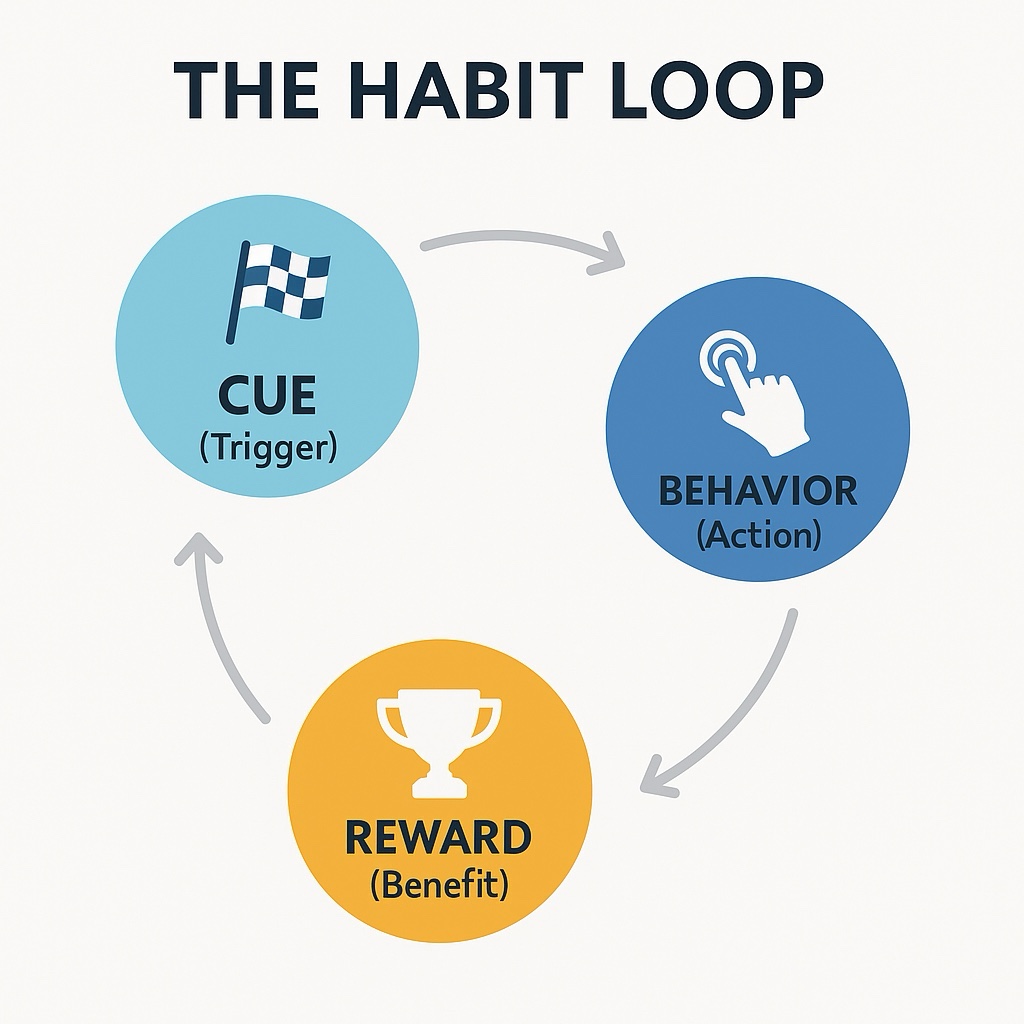
1. Cue (Trigger)
The cue is the signal that initiates a habit. It’s the moment your brain decides: “It’s time to act.” It can come from your environment (place, time, people), your emotions (boredom, stress, excitement), or your routine context (what just happened before). Example: Feeling stressed after a meeting (cue) may prompt you to open social media or grab a coffee. Recognizing cues helps us take back control of our automatic responses.
2. Behavior (Action)
The behavior is what you do in response to the cue — the visible habit. Example: Checking your phone, snacking, or replying to emails late at night. While cues are subconscious, behaviors can be consciously redesigned. By changing the action, you can reshape the outcome.
3. Reward (Benefit)
The reward is the benefit your brain receives from the behavior. It answers the question: “Was that worth it?” Example: You feel connected, relieved, or entertained — even briefly. Rewards reinforce habits by teaching your brain to remember the loop for next time. This is why change often fails when the reward is removed instead of redefined.
The Continuous Cycle
When the reward satisfies your brain, it reinforces the cue — and the loop continues. Over time, repetition makes the process automatic.
Practical Insights for Leaders and Professionals
In both personal development and organizational leadership, understanding the Habit Loop can reshape how we drive change.
Here’s how to apply it effectively:
1. Identify the Cue – Understand what triggers unproductive patterns.
2. Modify the Behavior – Substitute with a constructive action aligned to goals.
3. Reinforce the Reward – Recognize and celebrate small wins to build momentum.
Example: To build a culture of collaboration, a leader might create new cues (weekly huddles), establish clear behaviors (knowledge sharing), and reinforce rewards (public recognition).
Conclusion
The Habit Loop teaches us that lasting transformation doesn’t come from willpower alone — it comes from understanding and redesigning the systems that shape our behavior. By mastering this loop, individuals and organizations can achieve sustainable growth, discipline, and performance — one habit at a time.
Key Takeaway
“Change your cues, refine your behaviors, reward your progress — and your habits will follow

Leave a comment