
Alcohol often isn’t about pleasure it’s a pause button for pain, pressure, loneliness, and toxic environments.
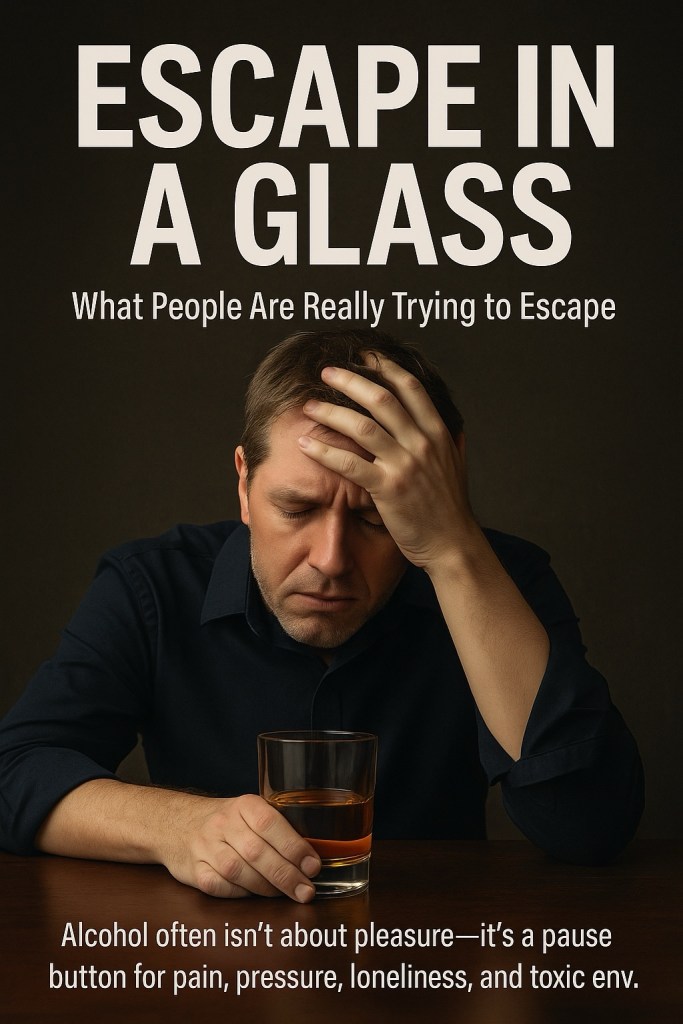
People rarely begin drinking because they love alcohol.For many, alcohol enters life as a tool an imperfect, temporary way to cope with something that feels too heavy to carry: pain, pressure, humiliation, loneliness, or an environment that keeps hurting them.
Drinking can become a shortcut: not a solution, but a pause button. For a little while, it lowers the volume of life.
This matters because alcohol is not a harmless escape. Globally, alcohol use contributes to major health and social harms and is associated with millions of deaths each year. Yet when we talk about drinking, we often focus only on morality good or bad , self-control strong or weak , or stereotypes about party culture. That framing misses what is most important: the function alcohol serves for the person who is drinking.
If you want to understand why many people drink especially why drinking becomes frequent or harmful you have to ask a different question: What are they trying to escape, numb, or survive?
Relief is the first reward
Alcohol can produce short-lived relaxation, reduced inhibition, and emotional numbing. That immediate relief is powerful because it is fast, familiar, and socially accepted in many places. When someone has limited coping skills, limited support, or limited control over their circumstances, the promise of quick relief can feel irresistible.
This is one reason drinking can shift from occasional to habitual. The mind learns a pattern that looks like self-care, at least at first:
stress → drink → temporary calm
embarrassment → drink → numbness
loneliness → drink → distraction
Over time, a person may begin to drink not for enjoyment, but because their brain expects relief. The need can grow even when the person knows that alcohol is creating new problems.
1) Drinking as a break from pain
Many people live with emotional wounds: heartbreak, grief, financial stress, rejection, chronic anxiety, or long-standing trauma. When the mind can’t rest when thoughts loop, when sleep is poor, when worry becomes constant—alcohol can feel like a fast, temporary sedative for the nervous system. It creates a brief unconsciousness.That doesn’t always mean literally passing out; often it means a mental fog where thoughts don’t cut as sharply.
The attraction is simple: pain demands attention. Alcohol offers a way to not pay attention for a while.
But the relief is short, and the cost can be high. Heavy or frequent drinking can worsen sleep, increase irritability, and intensify anxiety or low mood after the effects wear off.
For some people, that rebound discomfort becomes another trigger to drink again, strengthening a cycle that feels increasingly automatic.
2) Forgetting what they can’t face (self-medication)
Some people can’t explain exactly why they drink, but they feel it: something is wrong inside me or around me. Alcohol becomes a coping tool for emotions they haven’t learned to process—anger, shame, low self-worth, regret, and fear.
This is often described as self-medication ,using alcohol to manage emotional distress or symptoms related to mental health challenges.
Mental health and alcohol problems frequently overlap. Alcohol use disorder commonly co-occurs with conditions such as depression and anxiety disorders.
The relationship can run both ways: distress can drive drinking, and drinking can deepen distress. When people feel stuck, alcohol can look like the only available switch that turns feelings down.
In reality, alcohol often postpones the emotional work rather than resolving it. The underlying issues remain, waiting when the numbness fades.
3) Escaping toxic environments
(Home or Workplace)
One of the strongest drivers of harmful drinking is the environment people live in. If home feels hostile constant arguments, disrespect, control, emotional neglect the mind searches for exits.
If the workplace is full of pressure, insults, teasing, bullying, or unfair treatment, the same thing happens.
Toxic environments can make a person feel unsafe, powerless, or chronically on edge. Over time, that pressure can create a constant state of threat always anticipating the next conflict, the next humiliation, the next criticism. Chronic stress of this type harms well-being and can push people toward coping behaviors that offer immediate relief, even if those behaviors carry long-term harm.
When someone is repeatedly teased or put down, their life can become emotionally unbearable. They may start to believe there is no safe place not at home, not at work, not even in their own mind.
Alcohol then becomes a private hiding place: a few hours when they don’t have to perform, answer, or tolerate anyone.
Importantly, this does not mean that every person in a toxic environment will drink. But it does mean that environments shape behavior. When we ignore the environment and blame only the individual, we overlook one of the most changeable parts of the problem.
4) When entertainment becomes part of escape
Many people drink while watching TV, gaming, or scrolling online. It’s not always the content itself that causes drinking, but screens can intensify restlessness and disconnection. For a person already struggling, constant stimulation can make it harder to sit with quiet feelings. Alcohol then becomes a way to turn the mind off while the screen keeps the mind busy.
In those moments, drinking becomes ritual: screen + drink = less thinking.
This pattern is especially common in loneliness. Loneliness is not simply being alone.
It is feeling unseen, unsupported, or disconnected.
Alcohol can temporarily fill that gap by creating warmth, dulling self-criticism, or making time pass faster. Unfortunately, frequent drinking can also weaken motivation for real connection, making loneliness worse over time.
5) Alcohol as symptom, not root cause
A key truth is easy to miss: many drinkers are not trying to destroy themselves. They’re trying to survive their lives.
When life becomes unbearable, people often don’t ask, How do I heal? They ask, How do I get through tonight?
Alcohol provides an answer that is immediate, even if it is damaging.
Understanding this shifts the conversation from shame to support.
Shame says: You are the problem.
Support says: Something is hurting you ,let’s identify it and respond to it safely.
This perspective does not excuse harm caused by drinking. It does not deny responsibility. But it recognizes that long-term change becomes more likely when people feel safe enough to be honest about why they drink.
6) What actually helps (besides drinking)
If drinking is functioning as relief from pain, pressure, or toxicity, the most effective solutions usually focus on the root problem and on building healthier coping systems.
Practical supports include:
Reducing exposure to toxic people: boundaries, distance, de-escalation strategies, and when needed, formal steps at work (HR, transfers).
Talking to someone safe: a trusted friend, mentor, counselor, or support group.
Speaking pain out loud reduces its power.
Healthier stress outlets: exercise, walking, journaling, prayer, meditation, creative work, or structured hobbies tools that discharge stress without adding harm.
Improving sleep and routine:
poor sleep worsens emotional control and cravings. Stabilizing basics can reduce the need for quick fixes.
Professional help when drinking is frequent, compulsive, or hard to control.
Evidence-based therapies and medical support can be life-changing, and health agencies emphasize improving access to treatment and care.
The goal is not just stop drinking. The deeper goal is: make life feel manageable without alcohol.
Choosing understanding over judgment
People drink because they want to forget for a while pain for a while, pressure for a while, life for a while.
When home or office becomes toxic, when teasing and negativity make life feel unbearable, alcohol can look like the fastest exit.
But alcohol is a false kind of relief. It pauses suffering without solving it, and it often creates new suffering later.
So the better response is not shame, not mockery, not moral lectures.
The better response is understanding, support, and practical help because behind many drinking habits is a human being who is overwhelmed and trying, in the only way they know, to get through the night.

Leave a comment