
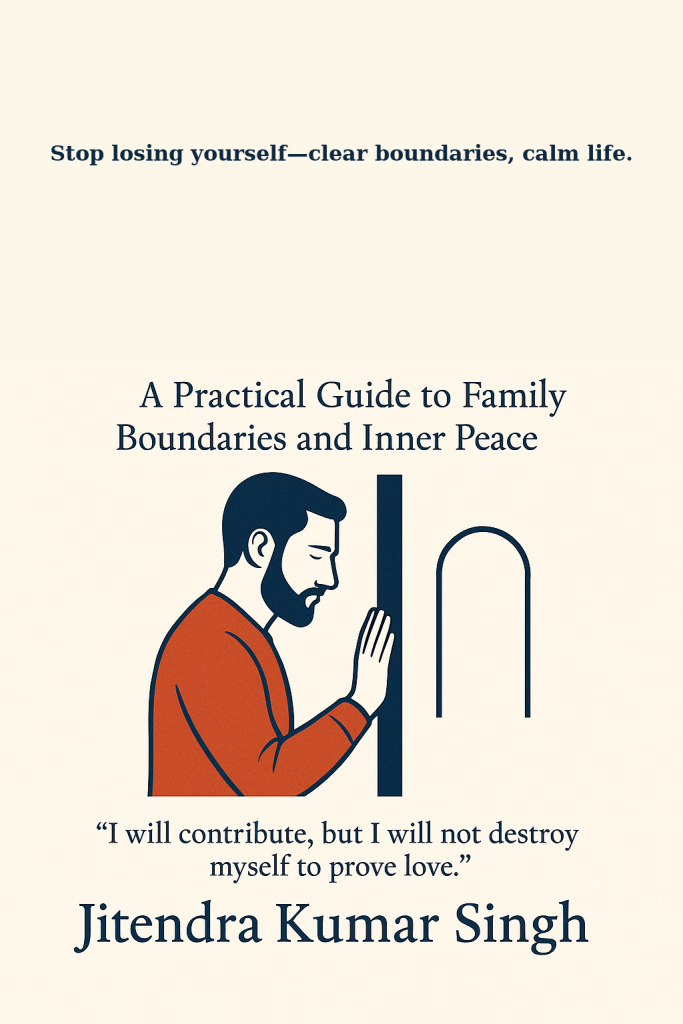
Stop Losing Yourself: A Practical Guide to Family Boundaries and Inner Peace
From People-Pleasing to Peace: The Power of Clear Boundaries
In many homes and cultures, we’re taught that love means sacrifice—and that being a “good” son, daughter, partner, or sibling requires endless adjustment. Over time, that belief can quietly steal something vital: your identity.
If you’ve ever felt like people take pieces of you—your time, energy, money, and peace—until you barely recognize yourself, this article is for you.
Because the truth is simple:You can choose yourself without being selfish.
You can keep your responsibilities without erasing yourself.
And peace doesn’t come from cutting everyone off.
Peace comes from boundaries you can actually hold.
1 The Hidden Problem: Responsibility vs Self-Erasure
There’s a difference between being responsible and being consumed.
• Responsibility means you contribute, support, and show up when you can.
• Self-erasure means you have no limits, no space, no voice—only obligation.
Many people don’t break because they don’t love their family.
They break because they keep proving love by suffering.
A powerful truth to remember:
Support is not the same as sacrifice.
2 A Simple Rule That Changes Everything
Try this boundary sentence:
I will contribute, but I will not destroy myself to prove love.
This one sentence helps you separate:
• what you can do
From
• what you shouldn’t do even if people demand it.
3 What “Choosing Yourself” Actually Looks Like
Choosing yourself is not a speech.
It’s a structure.
Pick these-non-negotiable that protect your life:
Time
• I’m available for family matters on X days only.
• I need personal time after Y PM.
Money
• I can contribute ₹___ per month, not more.
• I won’t take loans for anyone else’s choices.
Emotional energy
• I can listen for 20 minutes, not for hours of conflict.
• I won’t be the emotional dumping ground.
Respect
• If you shout or insult me, I end the conversation.
• I’ll talk when it’s respectful.
Then the most important part:
Enforce with actions, not explanations.
Explaining invites debate. Actions create clarity.
4) Calm, Firm Scripts (Use These Word-for-Word)
When you’re under pressure, short sentences work best:
When they demand more:
I understand. But I’m not able to do that. I can do this much.
When they guilt you:
I care about you. Guilt won’t change my answer.
When they call you selfish:
You’re free to feel that way. My decision stays the same.
When they want an argument:
I’m not debating. I’m informing you.
Exit line:
We can talk when it’s respectful. I’m ending this now.
A boundary is not a fight.
A boundary is a decision.
5 Why People Get Angry When You Start Setting Boundaries
This part surprises many people.
When you begin protecting yourself, some people may:
• accuse you of changing
• call you selfish
• create drama
• make you feel guilty
But often, that reaction is evidence that:
Your boundary is working.
Because it disrupts a system where your silence benefited others.
6 A Quick Self-Check: Is This Love or Is This Being Used?
If the responsibility is healthy, it usually includes:
• mutual respect
• shared effort
• appreciation
If you’re being taken for granted, it usually includes:
• entitlement (you must)
• guilt threats
• one-sided expectations
• you always adjust, they never do
Love should not feel like losing yourself.
7 The Fastest Path to Peace: Limited Access
You don’t need to cut people off to gain peace.
Sometimes you just need limited access.
Try this:
• Reduce availability (fewer calls/visits)
• Don’t overshare (less information = less control)
• Keep help structured (fixed time/money)
• Create distance from repeated disrespect
You can love people and still limit their access to you.
That’s not cruelty. That’s maturity.
8. One Important Note About Safety
If you ever feel trapped, unsafe, or pressured through:
• threats
• violence
• financial control
• forced decisions
That isn’t family responsibility.
That is abuse.
In that situation, prioritising safety and support is not selfish it is necessary.
Final Thought: A New Definition of a Good Person
A good person is not someone who is endlessly available.
A good person is someone who is honest, consistent, and self-respecting.
You were born for yourself.
You may have responsibilities but you don’t have to sacrifice your identity to fulfil them.
Choose yourself. Protect your peace. Keep your humanity.

Leave a comment